Saturday, December 31, 2011

THE END

I guess this blog has reached its terminus??? Or has it??? I am, at the moment, considering just taking out the '2011' and making this blog either:
  • "Every Book That I Have Read 2012-30XX" ?
  • an actual 'person' blog, like, where I talk about things (do I really want to do that?)
  • leaving the blog inert as of tomorrow
What's going to happen?? The Mystery.

2011 is probably the year I read the most amount of books. That is good! I hope to read more in 2012. I was thinking of making some charts and lists about the books that I read but now I just feel like that's probably not going to happen. The consensus is that most of the books I read in 2011 were great. That is great! The only books that I didn't finish in 2011 were Kobo Abe's The Face of Another and Richard Brautigan's Trout Fishing In America. Counting those books as a 'single' book (huh?? what kind of logic is this??), in 2011 I read about 78 books! Cool! Though to be fair, I have been reading quite a bit recently, and just have not gotten around to finish the following:
  • The Tin Drum by Gunter Grass (recently finished 'Part 1', about ~200 pages in)
  • Brodie's Report by Jorge Luis Borges (about ~40 pages left)
  • The Tennis Court Oath by John Ashbery (about ~30 pages left)
So that's it! Maybe! Happy New Years! If you have read this, thank you!

Best,
Sebastian

Friday, December 23, 2011

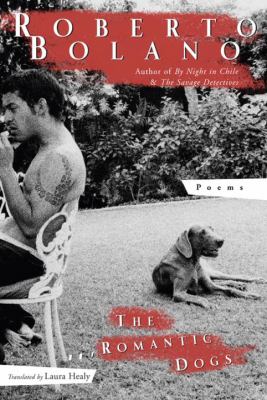
The Romantic Dogs by Roberto Bolaño

TITLE: The Romantic Dogs
AUTHOR: Roberto Bolaño
READ: December
THOUGHTS: Have read a bunch of the poems in here already. I enjoyed this poetry collection, though I have to admit that my opinion of these poems is obviously filtered through my already-existing obsession with Bolaño. There was actually probably more here that I disliked than 'liked'...well maybe that is a bit harsh! I think there are some aspects of Bolaño's poetry that I don't really enjoy, and I think it's because it is in his poems that his most sentimental impulses come out. Stuff like "no one is braver than poetry" or whatever...maybe I have a diminished opinion of the importance or 'bravery' of poetry...Zurita did, like, scar his cheek or whatever, and Bolaño was arrested when he was younger than I was, and poets today probably just complain about iPhones or something...well I guess writers today in general, or really just any young person born in the mid to late 80's living in the United States. There are definitely a bunch of poems in here that I really enjoyed. I also feel like the tonal and syntactic quality of his poems are an interesting counterpoint to his fiction, in that it sort of crystallizes the "Bolaño tone" and distills it into colloquial speech mixed with some sort of weird image-based-mystery-cum-abstraction thing. I also enjoyed the themes/setting for a lot of these poems: prostitutes, Mexico City as smog and violence void, sci-fi opining, putting your head into a black hole and thinking about that, etc. Yeah, good good I like it all, etc.

Wednesday, December 21, 2011

In Praise of Darkness by Jorge Luis Borges

TITLE: In Praise of Darkness
AUTHOR: Jorge Luis Borges
READ: December
THOUGHTS: Technically only read the prose pieces from this book, as my Borges collection doesn't have any of his poetry in it. The stories were all wonderful. As I have been making my way through the Borges oeuvre chronologically, and given that his most highly regarded work was written in '40's, I expected the Borges stories later on to lessen in quality. I have not found this to be true yet. It seems like as Borges got older he was able to condense what he wanted to do in an even smaller amount of space, even though most of his classic stories are only about 7-10 pages long. Some of the most powerful stories in here are about two or three paragraphs; I was particularly emotionally affected by "A Prayer." Also really love Borges' prefaces to all of his collections, something that by today's standards might seem 'lame' -- but I think I would like seeing more people writing prefaces to their own work in the future.

Friday, December 16, 2011

Some Trees by John Ashbery

TITLE: Some Trees
AUTHOR: John Ashbery
READ: December
THOUGHTS: Feel like I read poems pretty frequently but rarely sit down and read 'full' poetry books so I am going to try to rectify that in the coming months or so. Been thinking of getting through some Ashbery canon, decided to start chronologically. This honestly did not do much for me. I was bracing for the incomprehensible, trying to get into a zone where I can 'soak up' that kind of stuff, but it left me dry. Aside from "The Picture of Little J.A. in a Prospect of Flowers" and maybe a few others I mostly have already forgotten all of the words in this book. I dunno. I might be a dolt, but with poetry that is largely written in abstract and un-literal/concrete language my sensibility for what makes a poem work is incredibly murky and unintelligible. I guess it becomes closer to music, more about "feeling" or something, and I wasn't feeling it. Still about three or four more Ashbery books to come, and this was his really early stuff, so maybe I will come to like all of that a lot more! I really like "How Much Longer..." and "The Skaters" and the poems I've read in "Self Portrait In A Convex Mirror" so I have a feeling I will like the later stuff better.

Monday, December 12, 2011

Europeana by Patrik Ouředník

TITLE: Europeana
AUTHOR: Patrik Ouředník
READ: December
THOUGHTS: Have never read a book quite like this! I guess I would call it a kind of deconstructive narrative history of the 20th century, as much as that might make some (me) cringe. Despite its consistent deadpan tone and syntactic clarity there is no creedence given to historical linearity or even really any conventional idea of history. Dalkey calls it a novel, and I like that. It is much more a novel than a non-fiction text; it just so happens to be a novel written entirely with 'factual' elements, which I really like and I find exciting. Reading this made me tremendously curious about Patrik Ouředník, whom I have never really heard of before reading about this I think. I might have seen his name on some websites but no ideas or titles attached itself to the name. I would recommend this book to pretty much everyone. The structuring element along with the the tone really make it work for me. Because the tone feels so distant it, at times, almost felt like I was reading a story about a foreign world, that perhaps has nothing to do with the one I inhabit, which I take to be part of the conceit of the book. It almost felt like reading a 120 page version of the "Findings" section in Harper's. Great great yes. 20th century was a mistake and the 21st century will be weirder probably !!!

Saturday, December 10, 2011

The Third Reich by Roberto Bolaño

TITLE: The Third Reich
AUTHOR: Roberto Bolaño
READ: November-December
THOUGHTS: Enjoyed this, though didn't think so at first. The first hundred pages were a bit meandering and felt more like an exercise or 'practice novel' (the manuscript for this dates back to '89, which is about 4 or so years before Bolaño published The Skating Rink, which I believe is his first published novel? I could be wrong.) The book was close to 300 pages, which for Bolaño's shorter works is a bit long; at times I felt like this could have definitely merited a shorter length, though maybe the slow pace does well for the book's overall atmosphere, tone, etc. It very slowly develops into the perennial Bolaño narrative: a story with somewhat innocuous origins delves into a kind unseeable and unverified looming terror -- for the last third of the book you slowly suspect that something terrible is going to happen and then things just sort of peter out in both an anticlimactic (which is never a bad word in Bolaño) and emotionally confusing/diffused way. I would say this book stands well among other Bolaño novels. I don't think there is a single thing he has written that I have disliked, though I think this book will probably end up lumped into a grouping of 'lesser works' in the Bolaño oeuvre. Still lots of fun and not a boring moment, despite its slow pace.

Sunday, December 4, 2011

My Two Worlds by Sergio Chejfec

TITLE: My Two Worlds
AUTHOR: Sergio Chejfec
READ: December
THOUGHTS: Damn this book....after reading Vila-Matas' incredible preface for this book I was practically bouncing off of the walls with excitement to read it. It really is, I think, incredible. An antecedent, or perhaps just contemporary I guess, for this kind of writing is definitely Sebald: the solitary walker's soliloquy, and the nebulous, amorphous text that follows -- also dense, beautiful (thought more plain stated here than in Sebald, which I actually really like) and also brimming with a million things that it simultaneously is and isn't; it is also about a 100 pages long. I will admit that the narrator's philosophical, emotional, and social concerns all seem to mirror my own quite closely, so maybe that plays a part for why I feel such an overwhelming kinship with this book and its author, but there is something about this kind of writing that is incredibly exciting to me -- probably one of the most exciting books I have read this year. One of the things I have found out about myself by keeping this blog (man this sentence can only be embarrassing or stupid or both) is that I have a tendency to be able to write at great length and with great ease about books that I either thought were ok or don't feel particularly attached to. With this book, as with the other books that I really loved this year (Vila-Matas, Bolano, uhh others (don't feel like looking at my list)) there is a very real trepidation in my attempts to try and articulate why I have admired them so much, as if any stray or thoughtless remark will either smudge the book's reputation (a reputation which I am seeking to exalt and represent) or either just make me look really stupid, in that my reasons for liking something will appear to be fraudulent, inauthentic, barely articulated, superficial, etc. The knowledge that my experience with this book has been both the experience of filling myself into an inanimate object as much as it has been an experience of reading someones voice creates some weird kind of familiarity and estrangement, a relationship I think is present in the book between the narrator and the world he encounters and perhaps suggests the same kind of problem and/or weirdness of reading the traces of someone elses' existence, like the thing you're holding in between your hands. I don't know. My head is jumbled. All of these thoughts are nonsense.

Wednesday, November 30, 2011

Death Sentence by Maurice Blanchot

TITLE: Death Sentence
AUTHOR: Maurice Blanchot
READ: November
THOUGHTS: I feel like I probably have to read this book another two or three times to understand it on a level that is satisfying to me. That being said I was into this book, though I felt like it dragged at some points, probably mostly because of my inability to keep my head on while going through the text. I went through the second part in one sitting; it was a large chunk of unseparated text to get through. Blanchot's approach is really interesting to me...it manages to be both very refined, restrained, grounded but also abstract and 'free-floating' or something. On the sentence level he is very clear; the words are very sharp and textured sort of clearly, but once you begin to pile the sentences on top of each other the structure seems to lose its capacity to hold the sentences' coherency. The only other way I could describe it would be to say that you could isolate each sentence in this book, and they would certainly yield clear readings, but once grouped together into a 'coherent' text the thing starts to break free at the seams, which given Blanchot's aims and ideas re: writing is obviously intentionally done and executed skillfully. I still feel like my experience with this book was like meandering through a daydream that I can now only half remember, even though I finished it only a few hours ago. I would like to read some other Blanchot and then come back to this one. I have definitely not ever read a book quite like it, though Grillet, Bataille, et al. are definitely all in this ilk.

Friday, November 25, 2011

ABC of Reading by Ezra Pound

TITLE: ABC of Reading
AUTHOR: Ezra Pound
READ: November
THOUGHTS: Always fun to listen to people who speak with great authority, and I think that encompasses a lot of the fun here, though that is not to say that there isn't a lot to learn. Ezra Pound is very funny, very ardent about his ridiculous beliefs, though there is merit to a lot of what he says, of course. I don't want to go through all of the arguments he makes, but it seems that he is arguing, to a large degree, that if there is a form that something encompasses, like a poem form, or a novel form, it has an origin, roots, historical formation, etc. -- and that to truly understand the modern permutation of that form, you have to understand its history, embody it in your own study/reading, and ultimately be able to move forward with that historical knowledge in your own work. What results from that belief, though, are pronouncements like, 'unless you can read Latin, ancient Greek, Provencal (n.b. - what the fuck is that lol), archaic Italian, and old(e) English, you can't REALLY understand poetry, you can only pretend to.' Which is of course very funny, completely ridiculous, whatever. I understand what he is saying, though of course there is, within all of this, a gigantic assumption made about literature, that is, that just because Homer wrote some words and it was called 'literature' and fucking some other guy (let's say, James Joyce) wrote some words and caled it 'literature' that they are somehow the same thing. Here, I am perhaps transgressing beyond 'my thoughts on this book' into 'my thoughts on the history of literature and why Ezra Pound is an idiot sort of', but I think that given the confluence of influence re: that context seemingly determines even the language surrounding how to describe something, literature for Homer, James Joyce, and Dennis Cooper all mean incredibly different things, as all of those people exist(ed) in incredibly different worlds, to the extent by which calling everything Literature as if there was some sort of metaphysical unity that the written word has been beholden to might be a bit of stretch, if not completely ignorant of the discursive bullshit that allows you to think the way you do (up is up, down is down, etc.). Despite the fact that I disagree with Pound on probably more than less, reading this is a bit of a window into that time period's criticims and thought, and perhaps explains a bit of the proclivities people like Pound, Eliot, and Joyce were so fond of that appear so snobbish and embarrassing by today's standards (to me). It was very fun and informative to read, and I enjoyed reading it throughout.

The Sun Also Rises by Ernest Hemingway

TITLE: The Sun Also Rises
AUTHOR: Ernest Hemingway
READ: November
THOUGHTS: I think I am deathly allergic to something in my house, most likely dust, but I'd like to imagine that it is some sort of secret poison filtering/floating through my breathing air, coming to slowly kill me, which it has identified as its target. I have sniffled all day, snot running down my nose, and read the last 150 pages of this book in one sitting, mucus constantly threatening to soil the pages, which I have thankfully avoided since I don't own this book. I believe it has taught me a lot about the 'realist narrative' despite that this is supposed to be a book that has defined a generation that is supposedly seeking to distance itself from anything that would be associated with the 19th century. If this was the book that defined that generation then I either feel bad for that generation, or at least think that they are a bunch of retards and its probably good that most of them are dead and that the world is humming without them. Heehee. I don't know. I enjoyed this book in the same way I would have enjoyed a Jennifer Aniston romantic comedy because I'm holed up in a hotel room somewhere with nothing to do. Hemingway's prose style. This guy isn't really one for complexity is he! I guess that is cool. In all honesty I can see how this kind of writing has influenced a few generations of American writers, from Carver to Roth to whoever. And also, I guess because I have already read so many versions of this, those other versions having been influenced by other books that had been influenced by other books that had been influenced by this book, it felt like I wasn't reading anything particularly new or exciting. This wasn't a particularly exciting read for me at all. I don't know, I feel, for reasons obscure to me, some desire to shit on this book. I will be reading The Great Gatsby next, because I have not read that since I was 15, and I done grown up since then. I remember liking it when I was 15. I think the only other 'major' Hemingway I haven't read at this point is "For Whom The Bells Toll" and "A Moveable Feast," both of which I intend to read eventually.

Tuesday, November 22, 2011

Ferdydurke by Witold Gombrowicz

TITLE: Ferdydurke
AUTHOR: Witold Gombrowicz
READ: November
THOUGHTS: This book....well, it's complicated. I really loved Gombrowicz in Pornografia, though if I remember correctly, that book wasn't exactly a page turner either. The last 80 or so pages of this book were kind of a struggle to get through. I feel like I have been reading this book for weeks (finished it last night). The 'zaniness' of Gombrowicz here is focusing a little more on the social realm than as a narrative device (which I thought was the central focus of Pornografia, like Humbert Humbert in Lolita). I remember reading (or hearing) a comparisson to Candide, and I think that is apt, in that Candide for me, despite its moments of humor, intelligence, etc. amounts to a bildsgrundroman centered around a single joke, that it makes over and over again. Candide has the good fortune of only being about 70 pages, whereas this book is close to 300. I felt that the thematic conceit of this book started to stretch itself a little thin toward the end. There was also something about this book that seemed 'dated': like the 'main joke' here seems to be the reversal of stupid binaries among people, specifically young and old, and the collapsing of established hierarchies in adult society, but given that this was written in the 30's and I am reading this close to 80 years after its publication, it seems like the joke of this book isn't too scandalous in the world I live in. I still like Gombrowicz a whole lot and intend to read the other two novels I haven't read, and maybe one day read the Diaries. Not sure when. So, uhh, final verdict: still love Gombrowicz, but was slightly disappointed (and sort of frustrated) with this book.

The Maker by Jorge Luis Borges

TITLE: The Maker
AUTHOR: Jorge Luis Borges
READ: November
THOUGHTS: Remembering starting to read this out of nowhere because I felt depressed and thought that Borges would lift my spirits...it worked! Borges is just...I don't know, I feel like I can't even quite fully articulate why I think he is one of my favorite authors, quite possibly my favorite (!!). These short pieces are all very memorable, all written with the Borgesian penache, fluidity of style, bookwormism (all things I admire!). Will probably read the rest of the Borges ouerve in the next two months or so. Some of my favorite stories here (and elsewhere) read like a mixture of essays on theology, philosophy, mystical poetic aspirations, and expeditions into voids in time, memory, history, etc. Really like his focus on writing invented biographical information on the artists of antiquity or whatever. If I had to make a softball team out of 20th century writers I think I would appoint Borges as the coach.

Saturday, November 12, 2011

Leaving The Atocha Station by Ben Lerner

TITLE: Leaving The Atocha Station
AUTHOR: Ben Lerner
READ: Novemember
THOUGHTS: Hmm...this book....what did I think...hmm...Going to write this 'thoughts' section differently....I think! Alright so the cover: definitely sucks. I found the large-page layout of this book disconcerting at first not gonna lie!! Makes me feel like I have to do more work because I'm reading more per page. What's that about huh...the back cover: realized (have always known) that I seriously hate author photos more than anything I think. If I ever put my photo on a book I think I would prefer to put a picture of me as a child holding a Gameboy or maybe just like naked, not sure! Surprised that they got John Ashberry to blurb about this book. Paul Auster also blurbed about this. I spoke to Paul Auster on the phone for ~15 seconds when I was interning at New Directions because he wanted to talk to someone. Think I might have said something weird!! Or at least awkward. It was cool to talk to him. Talking to him on the phone made me feel like getting Paul Auster to blurb your book is probably pretty easy, or at least doable, whereas John Ashberry just exists for me as this sort of like weird mythic weirdo poet. Don't really know if I've ever formed a serious opinion on John Ashberry...really love Koch/O'Hara and other NY School people...it seems like I would love JA....maybe I should check that guy out again....remember his poetry being a little too opaque for my tastes....maybe I should change my thoughts on what I think is good huh!!! Not sure about that. This book, what I think: definitely a lot that I liked about it. It was very readable, went through it in like two days. I think the analogy I came up for this book, though (it will not be a kind analogy!!), is that its like a record that you buy that only has two songs on it, and you like the songs, but are kinda bummed that there are only two songs. By this I mean: the questions/perspectives on art (whatever) that this narrator interweaves between the narrative (and within the narrative) are questions that are interesting to me, because I guess I am humongous idiot that cares about art or whatever, but I felt as if this book had like two "philosophical points" it was trying to make about art that it reiterated in so many ways and events that it began to feel heavy handed -- though heavy handed isn't the right phrase, this book has a very light touch! Ben Lerner definitely knows how to write in a very engaging way know what I am saying! Never felt a smidgen of boredom or not wanting to read it. Oh and also, while I am someone who I think never really cares about characters too much (with rare exceptions...uh...The Wire...Bolano...stuff...) I felt incredibly irritated with this protagonist, and while this is clearly a desired effect of the author, he never really seems to redeem himself in any way for me that made me feel that whatever philosophical pronouncement he was making was tinged with my knowledge that the character is this douchy intellectual asshole and I definitely don't like those types of people know what I'm saying!! Generally enjoyed this book a good amount, would recommend it to people, really made me want to go to Spain, which has already been a very large desire of mine for some time (will it ever happen?? huh?? will I just live in my mom's house forever?? what's up?? damn, I just ate some fried chicken before writing this and, given that I don't normally eat greasy foods I think it is having some sort of transformative effect re: my perspective on life...nothing feels overly serious...what the H). Bye!!!!!

Tuesday, November 8, 2011

The Marbled Swarm by Dennis Cooper

TITLE: The Marbled Swarm
AUTHOR: Dennis Cooper
READ: November
THOUGHTS: Damn, this one was a doozy for real. Really excited/glad that DC changed things up re: prose style/general approach on this one. I think structurally it most resembles Period, or some sort of Robbe-Grillet aesthetic, in that there is a recurring looping structure, colluding of different narratives with several key points from other narratives (within the text), etc. After finishing immediately felt that I needed to re-read it again. I really loved it.

Tuesday, November 1, 2011

The Story of the Eye by Georges Bataille

TITLE: The Story of the Eye
AUTHOR: Georges Bataille
READ: October - November
THOUGHTS: Lewd! But that is to be expected. I really enjoyed reading this. I like the clarity of the prose style, still sort of obliquely moving along and jettisoning conventionally important plot-related things (perhaps the 'obscured periphery' involved in an ocular analogy would do well in relating to the way Bataille writes the story...). I like the juvenille/immature way that desire creates this umbrella over everything in life (sex, piss/shit, violence, love, fear, etc.). Think I will be buying some of his non-fiction/'philosophy' writings soon, though I am very interested in reading more of his fiction.

Guide by Dennis Cooper

TITLE: Guide
AUTHOR: Dennis Cooper
READ: October
THOUGHTS: V. cool as usual! Starting to loose steam w/r/t this blog...maybe not...I don't know...just take whatever I have said about other DC books, which is not something that is interesting nor original, and augment those judgments w/ "formally growing closer to the kind of territory he goes into in 'Period', which is my favorite DC book, so that makes this one up there for me, too." Ordered The Marbled Swarm today, very excited to read that!

Tuesday, October 25, 2011

Fatale by Jean-Patrick Manchette

TITLE: Fatale
AUTHOR: Jean-Patrick Manchette
READ: October
THOUGHTS: Picked this up on a whim at the library because I had seen the cover before and because I trust NYRB. Also wanted to read something a little different re: the stuff I usually read (this being a crime-noir-femme-fatale type thing). Expected more out of it. I enjoyed reading it throughout, but I sort of was hoping that it was going to be uhhh 'heftier'? More insipred? I don't know. I thought most of it was well written, with the exception of some slighty-verging-on-ridiculous and/or implaussable scenes (since this book is presenting itself as a realist noir I don't feel bad holding it to those standards (!), etc.). Glad I read it, will most likely completely forget I ever read this book in about a year.

The Zone by Sergei Dovlatov

TITLE: The Zone
AUTHOR: Sergei Dovlatov
READ: October
THOUGHTS: Liked this one a lot, though not as much as 'The Suitcase.' Again the Dovlatov voice being the thing that really holds it all together, along w/ the moral relativity that is rendered very movingly, interestingly, funnily, etc. A few scenes stand out much stronger than the rest. Think I might take a break w/ Dovlatov but I will probably end up reading all of his other stuff, too.

Thursday, October 20, 2011

The Leviathan by Joseph Roth

TITLE: The Leviathan
AUTHOR: Joseph Roth
READ: October
THOUGHTS: Can't think of any other word to describe this book other than 'delightful.' Roth's prose, pacing, and story has a very whimsical characteristic to it, though there is also slight traces of irony/playfulness, other stuff, etc. I think the movement of the text -- using a sort of 'cursory' fairy-tale kind of set-up to keep it going pretty quickly, pausing slightly here and there for little morsels/details -- is the most interesting thing about this book. I really enjoyed it, and want to read more Roth, whom I like more than other Roths I think, heee heee. Very nice.

Tuesday, October 18, 2011

The Museum of Eterna's Novel (The First Good Novel) by Macedonio Fernández

TITLE: The Museum of Eterna's Novel (The First Good Novel)
AUTHOR: Macedonio Fernández 
READ: Sept-Oct
THOUGHTS: Was really really excited to read this. Hooked me w/ concept alone: novel with 50+ prologues plus main novel about "characters" living in a place called "La Novela" (nyuck). The playfulness in this book is a bit out of control, though it can be very appealing/funny/interesting. I think this might be one of those "more interesting to think/talk about than read" kind of things ultimately, because getting through this whole book was pretty difficult at times; a large portion of it is Fernández talking about being vs. nothingness, his ideas on fiction, love, phenomenology, etc. Still way ahead of its time (mostly written in 30's/40's) and a very interesting example of a novel with an overwhelmingly metafictional aesthetic attempting to address very important (though conventional) questions about life and shit. A very inspirational book, really would like to read more about his life/other works. (Also wonder if anything has been lost on me due to my lack of knowledge re: Argentine literary scene during the 30's and 40's).